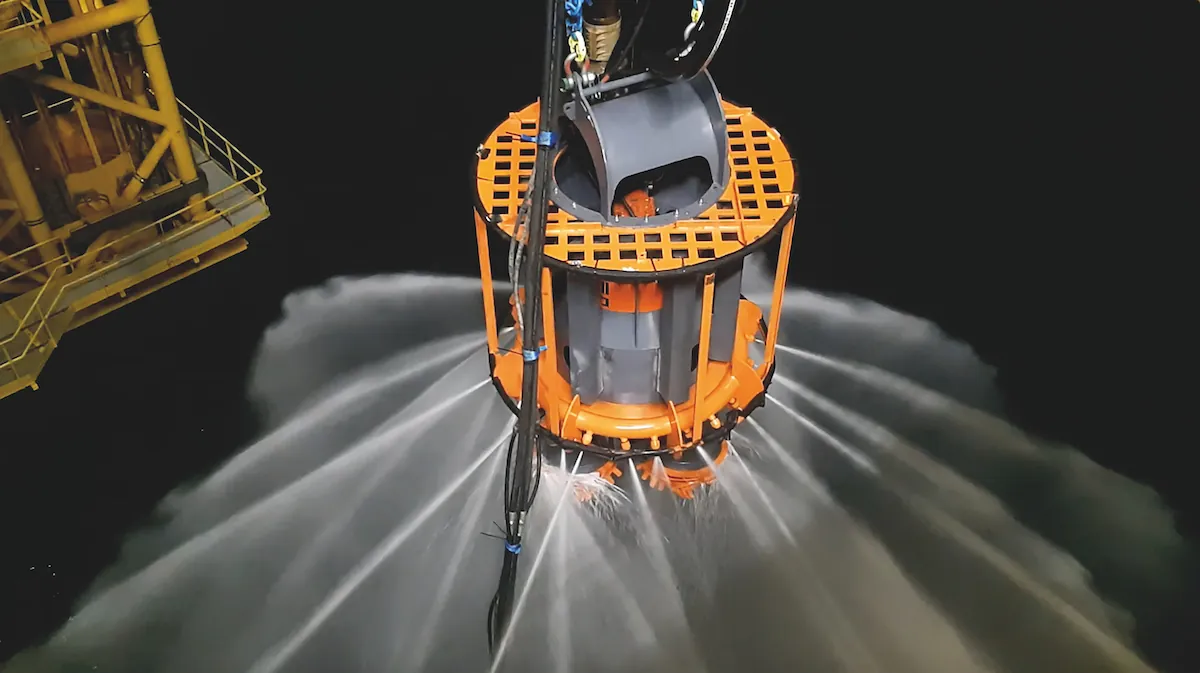
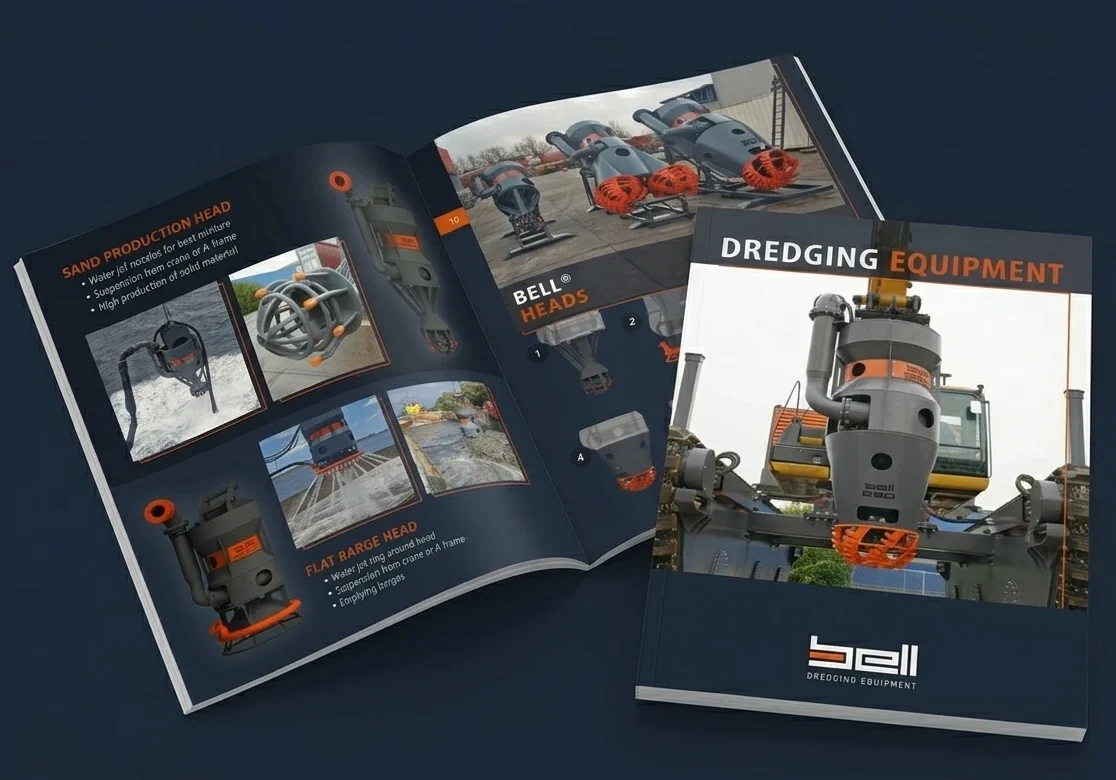
Your supplier for heavy-duty dredge pumps.
Our organization is highly specialized in various dredging types in the Netherlands but especially abroad. With our specialized machines, dredging equipment and extensive experience we can complete your challenging projects in a time- and cost- effective way.
Down below is an overview of the Bell Pumps, some in combination with our Bell Heads.
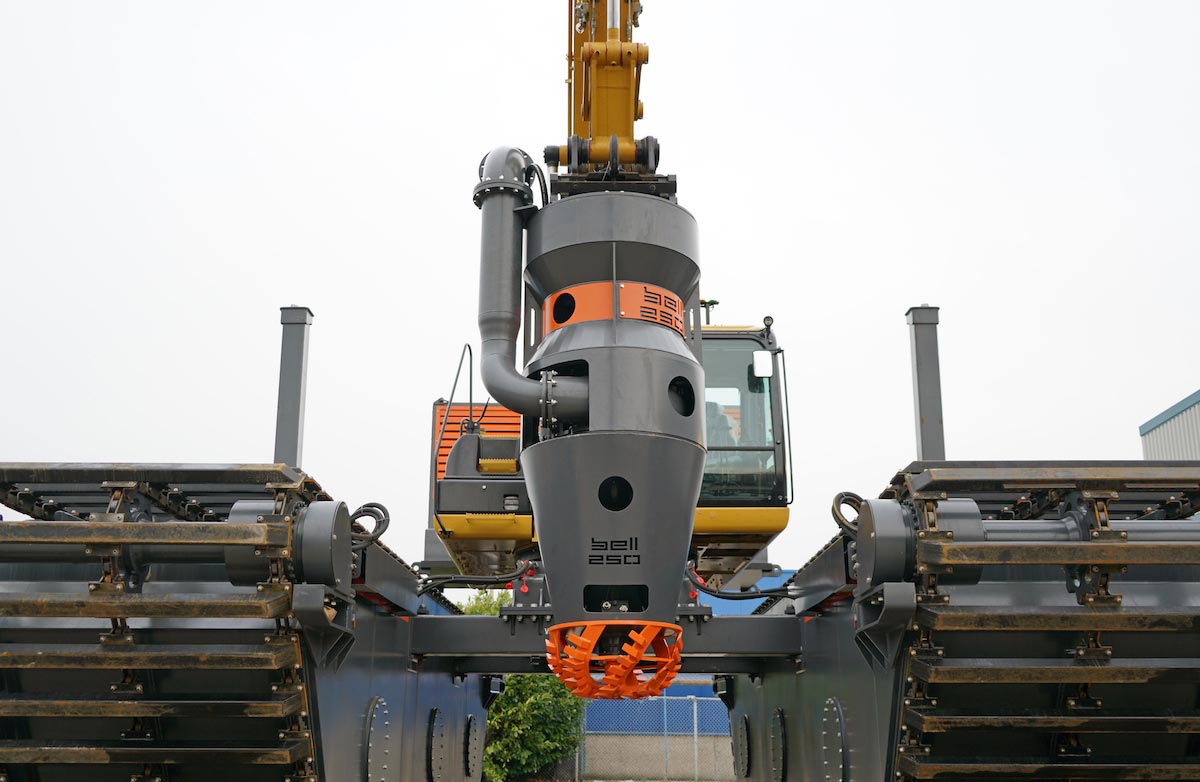
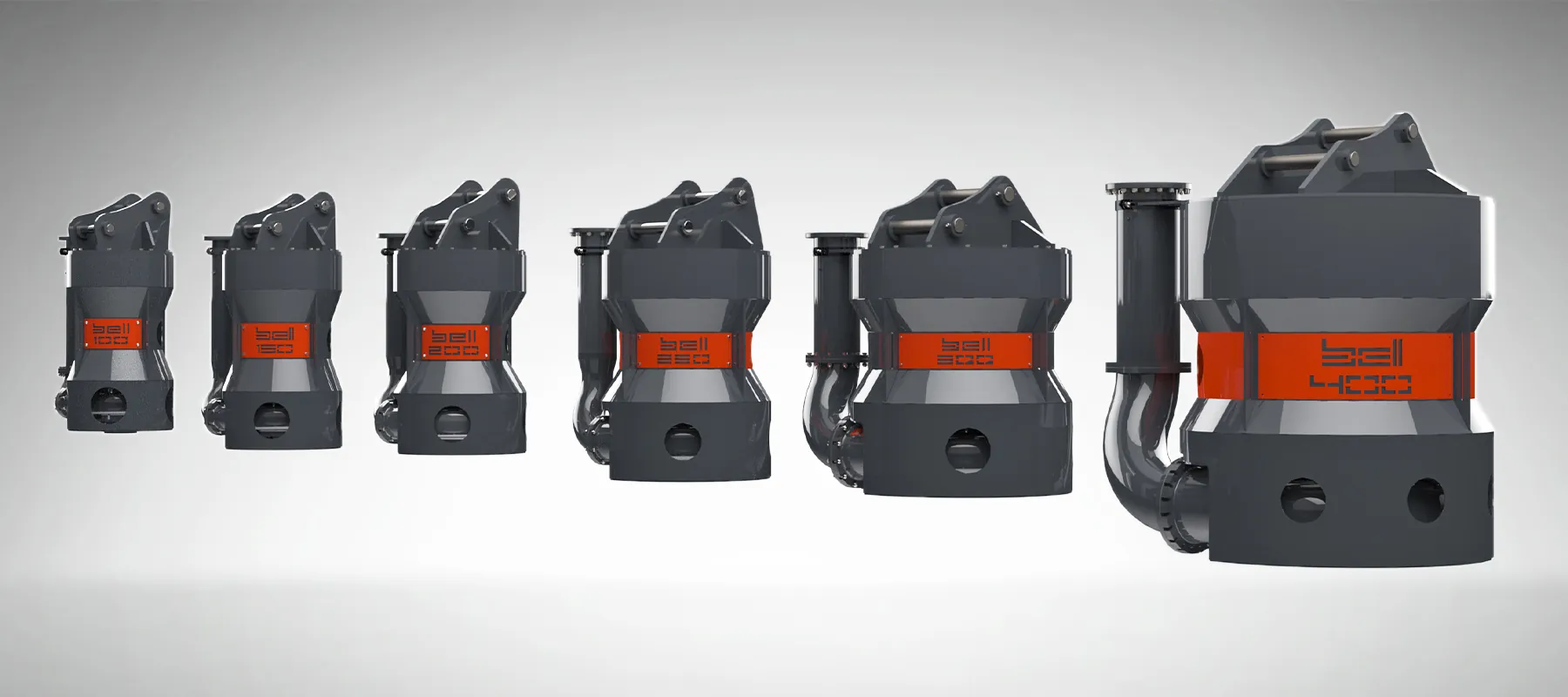
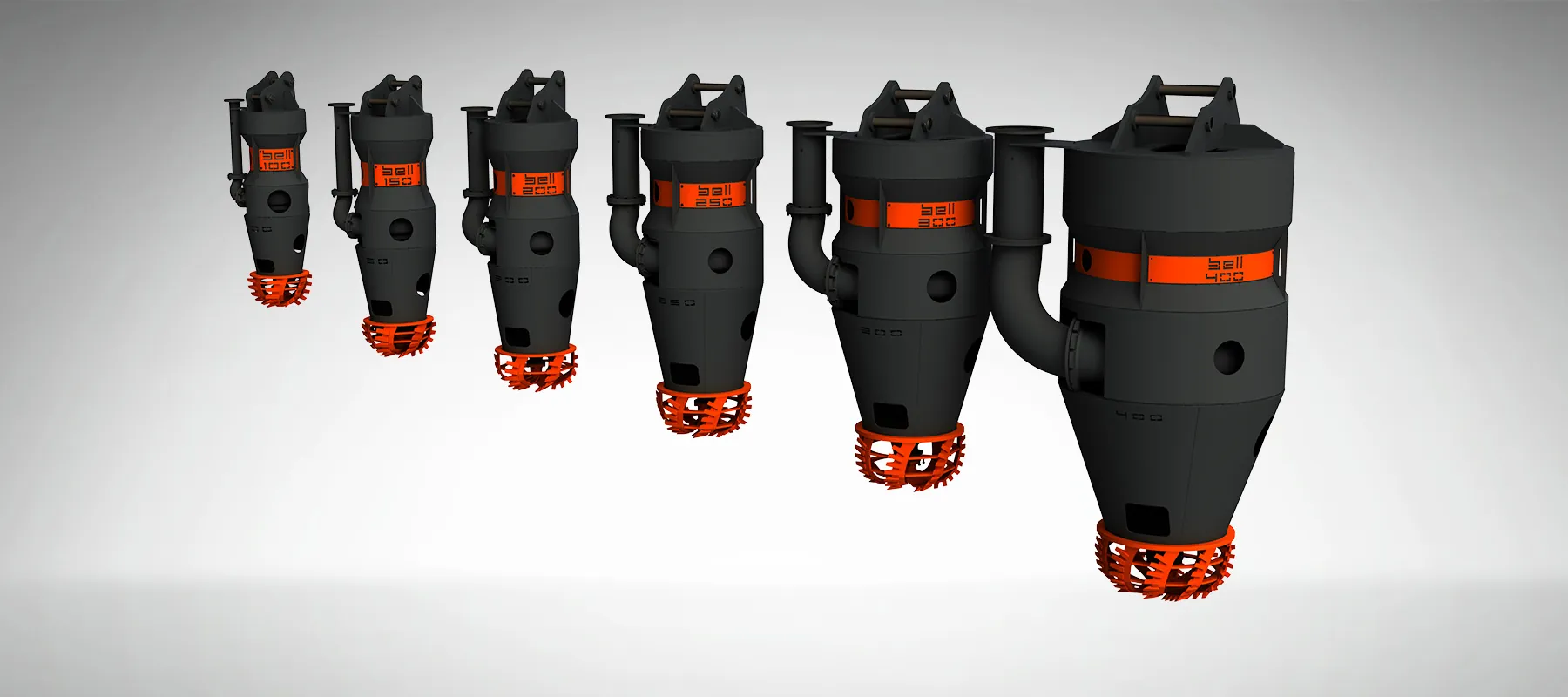
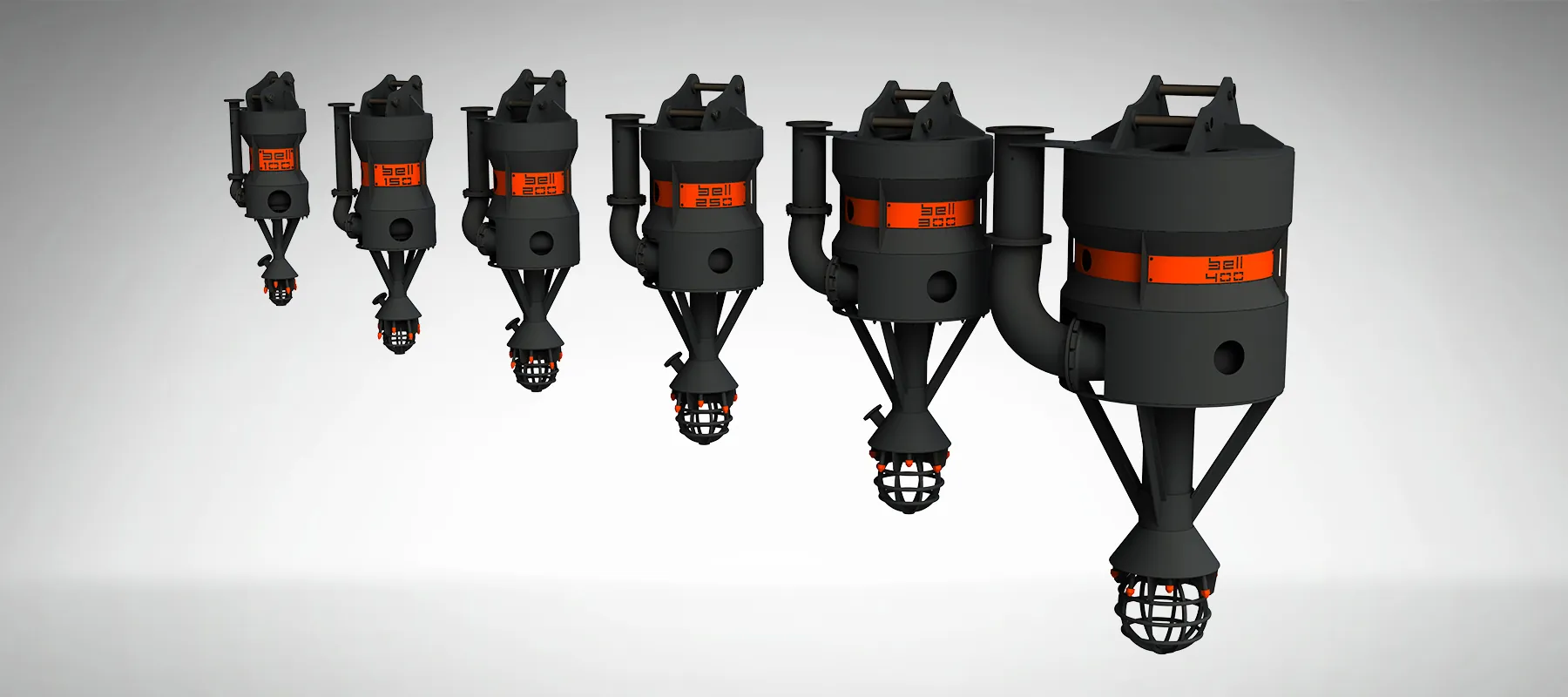
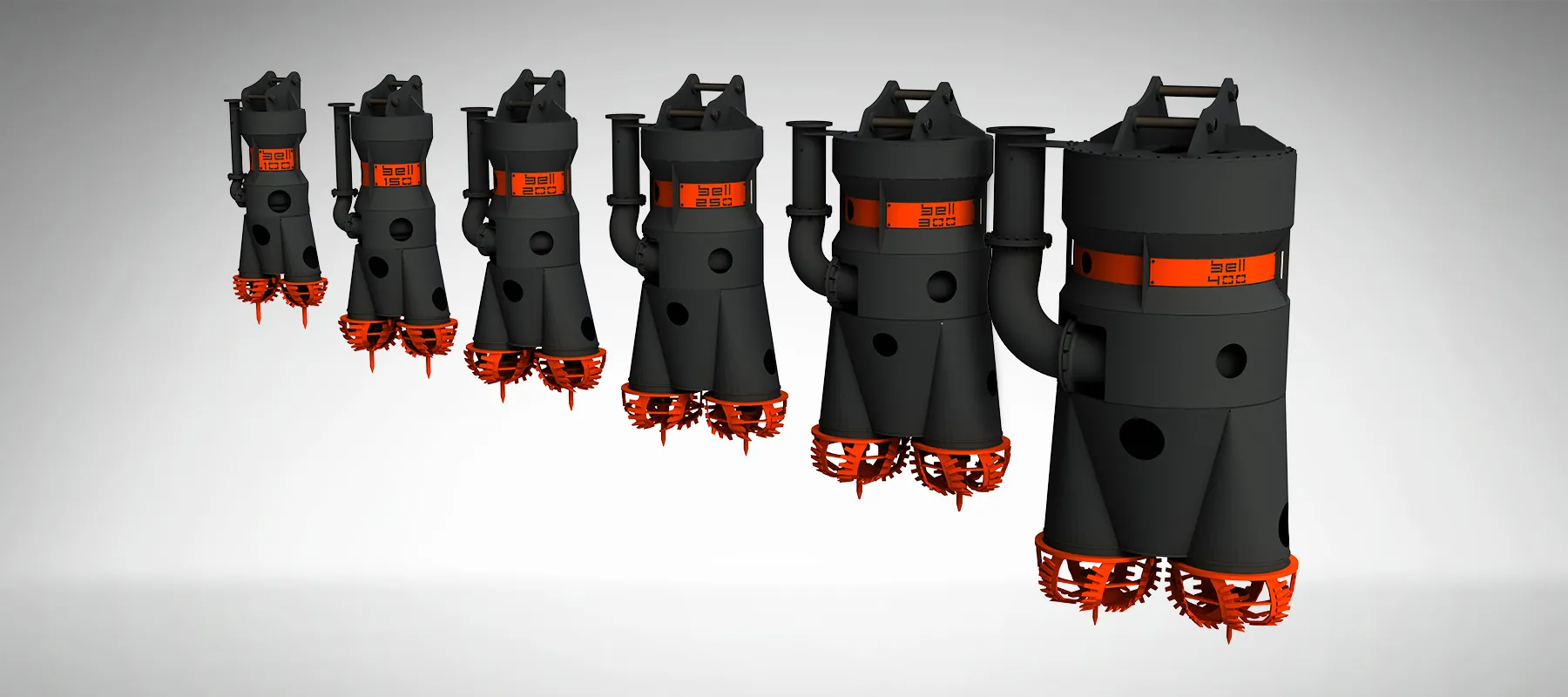
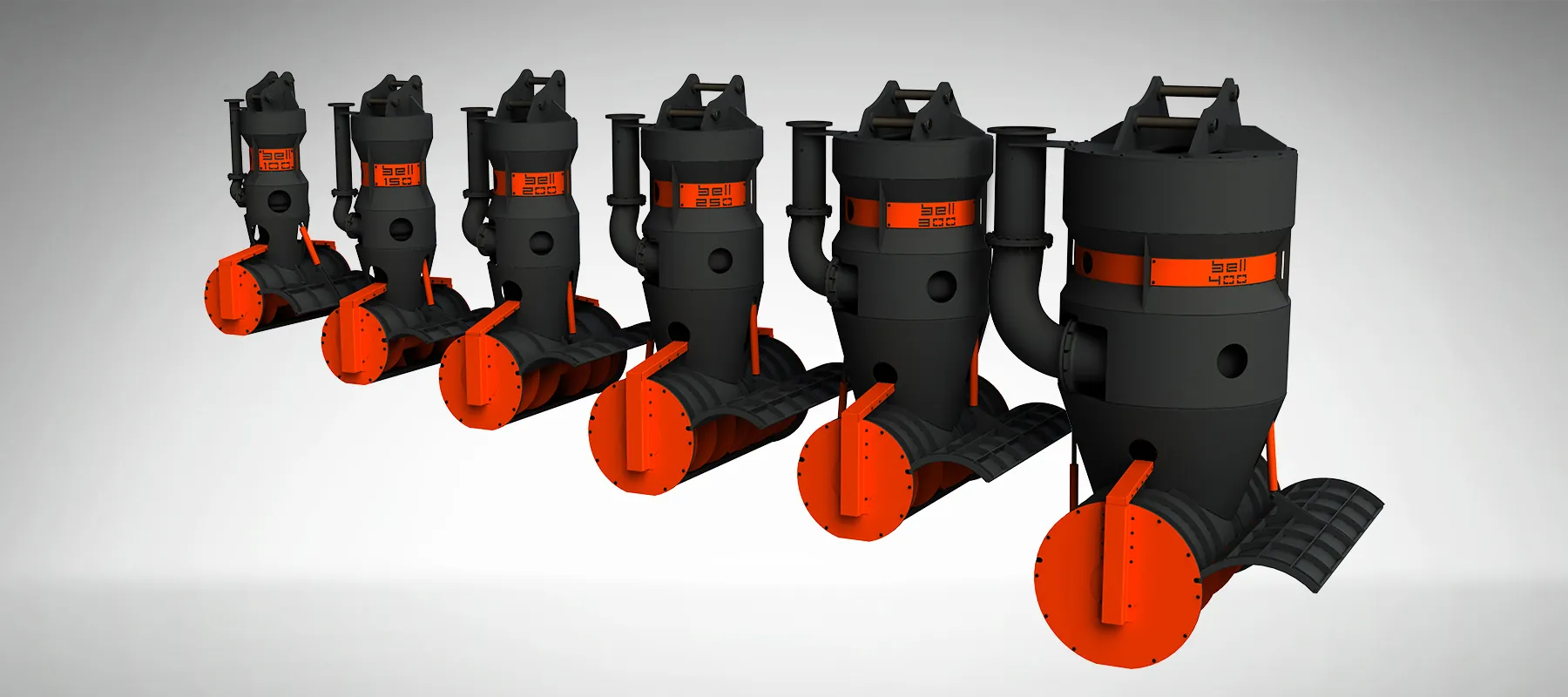
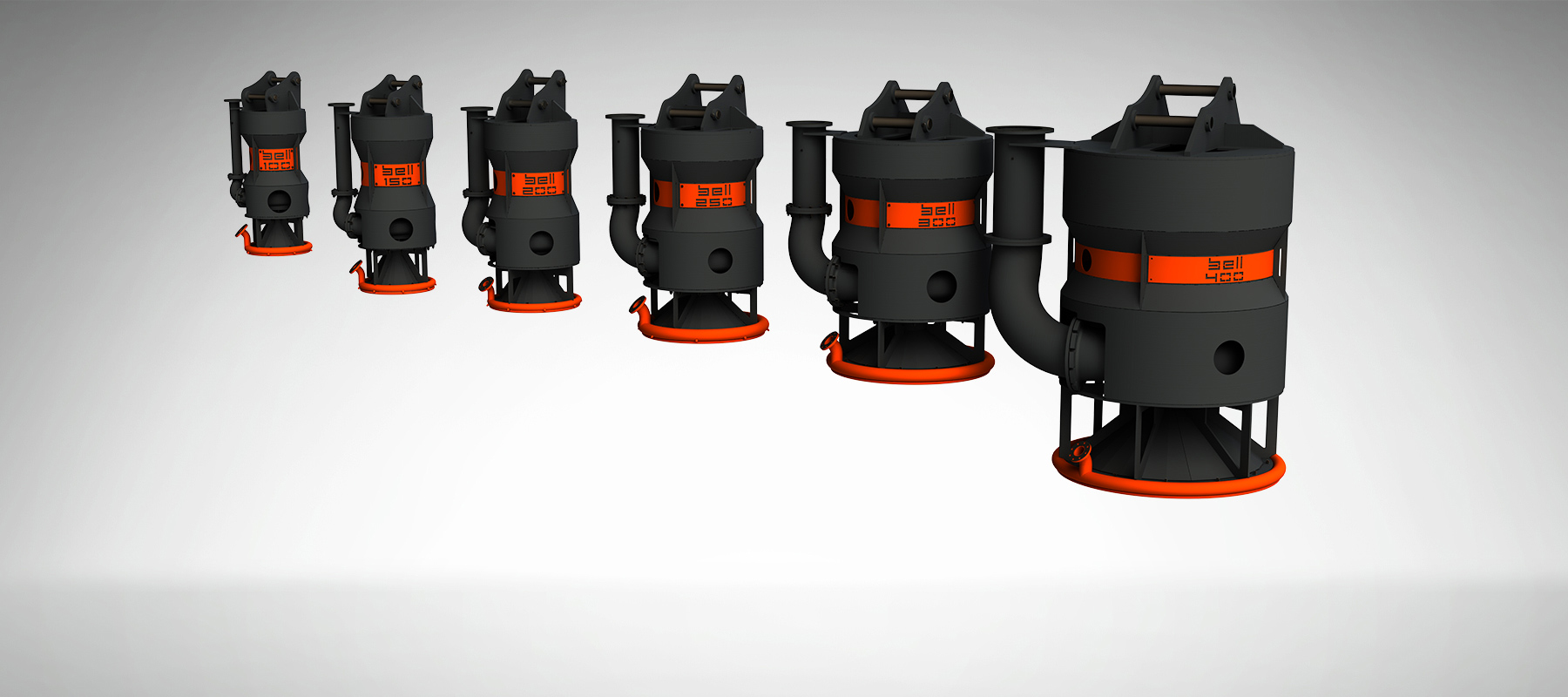

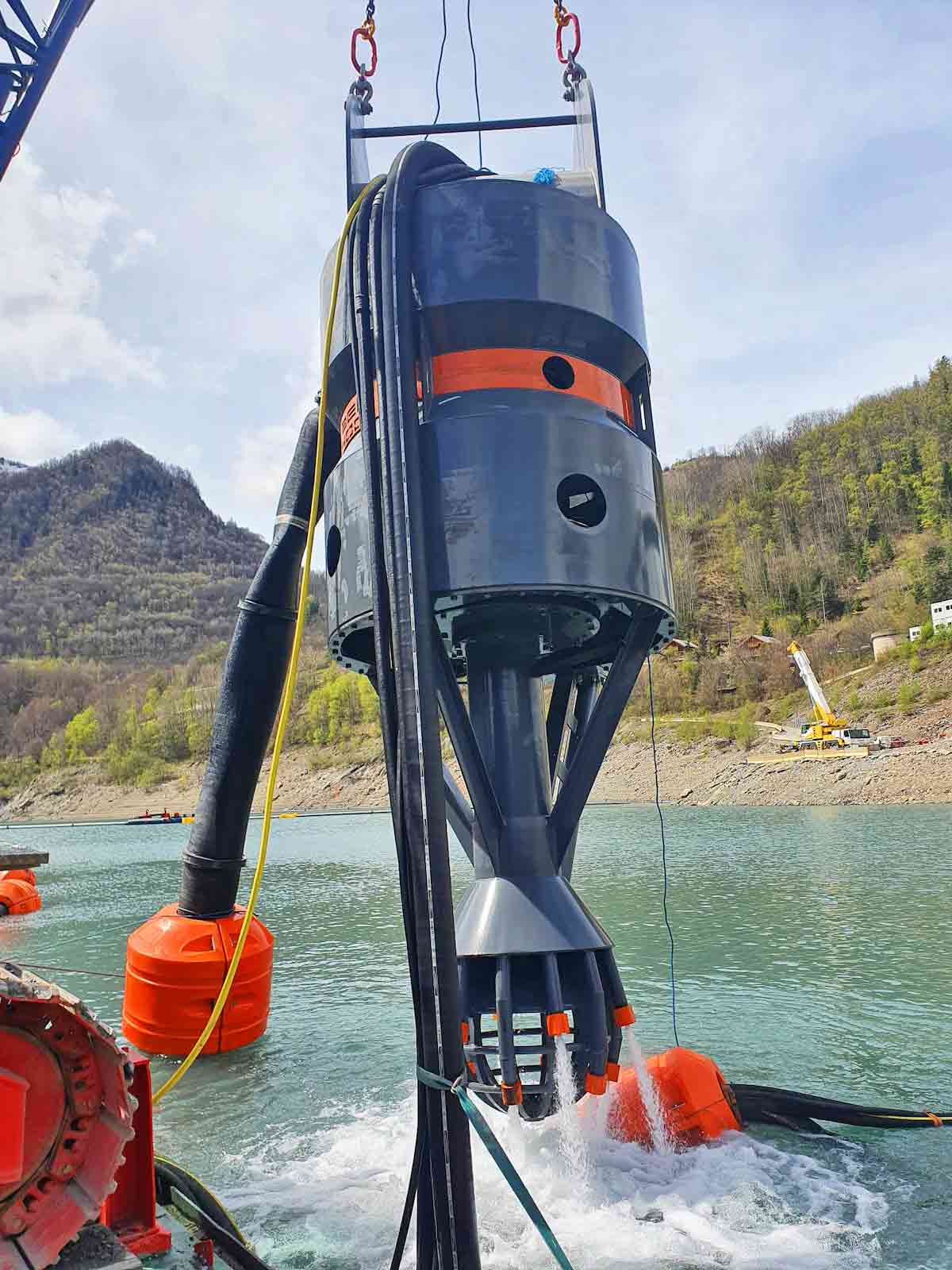
Our Bell dredging pump is a highly efficient pump and can be equipped with a different head for every type of operation. All of our pump heads are interchangeable, which means you can use the same pump for different purposes!
One of the most commonly used configurations is the sand pump, designed specifically for high-volume sand extraction and transport. This setup ensures optimal efficiency when working in sand mining, land reclamation, or other sediment-moving projects.
We can modify the design to every customer’s needs. Please contact us for more information!
| Specification | Bell 100 | Bell 150 | Bell 200 | Bell 250 | Bell 300 | Bell 400 | Unit |
|---|---|---|---|---|---|---|---|
| Max mixture capacity | 300 | 500 | 800 | 1250 | 1800 | 3500 | m³/h |
| Max impeller speed | 1350 | 1300 | 1200 | 900 | 750 | 550 | rpm |
| Max power at shaft | 30 | 75 | 110 | 190 | 300 | 500 | kW |
| Suction bore | ø100 | ø150 | ø200 | ø250 | ø300 | ø400 | mm |
| Discharge bore | ø100 | ø150 | ø200 | ø250 | ø300 | ø400 | mm |
| Spherical passage | 50 | 75 | 125 | 130 | 155 | 210 | mm |
| Weight hydraulic (without head) | 550 | 950 | 1200 | 2000 | 3500 | 7750 | kg |
| Weight electric (without head) | 1000 | 1375 | 1900 | 2900 | 4600 | 9150 | kg |
| Max hydraulic pressure* | 250 | 250 | 250 | 250 | 300 | 300 | bar |
| Max hydraulic pump flow* | 85 | 195 | 290 | 475 | 600 | 1000 | L/min |
| Hydraulic cutter head flow | 15-20 | 15-20 | 35-50 | 35-50 | 70-110 | 140-210 | L/min |
| Hydraulic double cutter head/auger head flow | 30-40 | 30-40 | 70-100 | 70-100 | 140-220 | 280-420 | L/min |
| Specification | Bell 100 | Bell 150 | Bell 200 | Bell 250 | Bell 300 | Bell 400 | Unit |
|---|---|---|---|---|---|---|---|
| Max mixture capacity | 392 | 654 | 1046 | 1635 | 2354 | 4578 | yd³/hr |
| Max impeller speed | 1350 | 1300 | 1200 | 900 | 750 | 550 | rpm |
| Max power at shaft | 40 | 102 | 150 | 258 | 408 | 680 | hp |
| Suction bore | ø4 | ø6 | ø8 | ø10 | ø12 | ø16 | in |
| Discharge bore | ø4 | ø6 | ø8 | ø10 | ø12 | ø16 | in |
| Spherical passage | 2 | 3 | 5 | 5 1/8 | 6 | 7 7/8 | in |
| Weight hydraulic (without head) | 1212 | 2094 | 2645 | 3527 | 6613 | 17085 | lbs |
| Weight electric (without head) | 2204 | 3031 | 4188 | 5511 | 9038 | 20172 | lbs |
| Max hydraulic pressure* | 3625 | 3625 | 3625 | 3625 | 4351 | 4351 | psi |
| Max hydraulic pump flow* | 23 | 51 | 76 | 125 | 158 | 264 | gpm |
| Hydraulic cutter head flow | 4-5 | 4-5 | 9-13 | 9-13 | 18-29 | 37-55 | gpm |
| Hydraulic double cutter head/auger head flow | 8-10 | 8-10 | 18-26 | 18-26 | 36-58 | 74-110 | gpm |
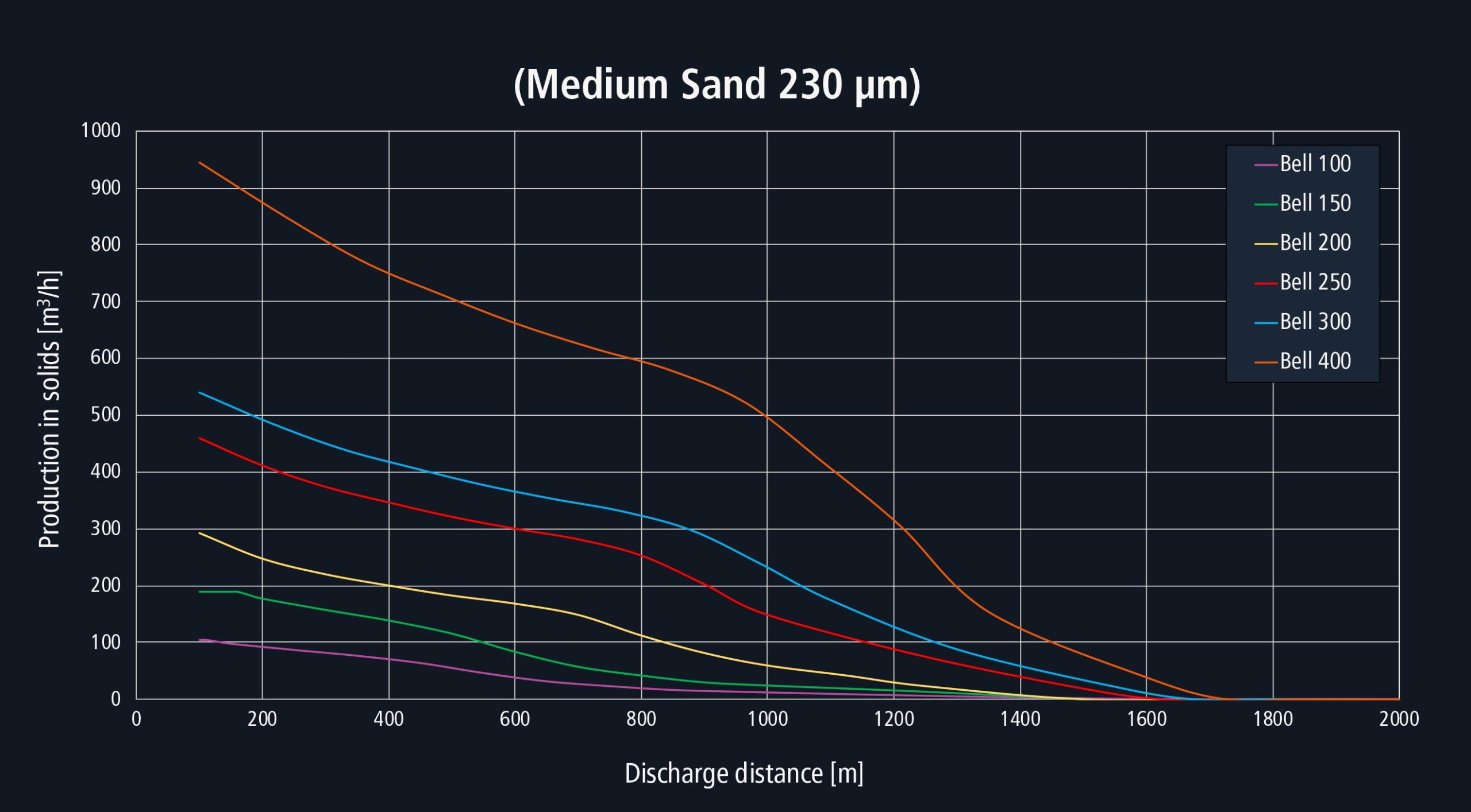
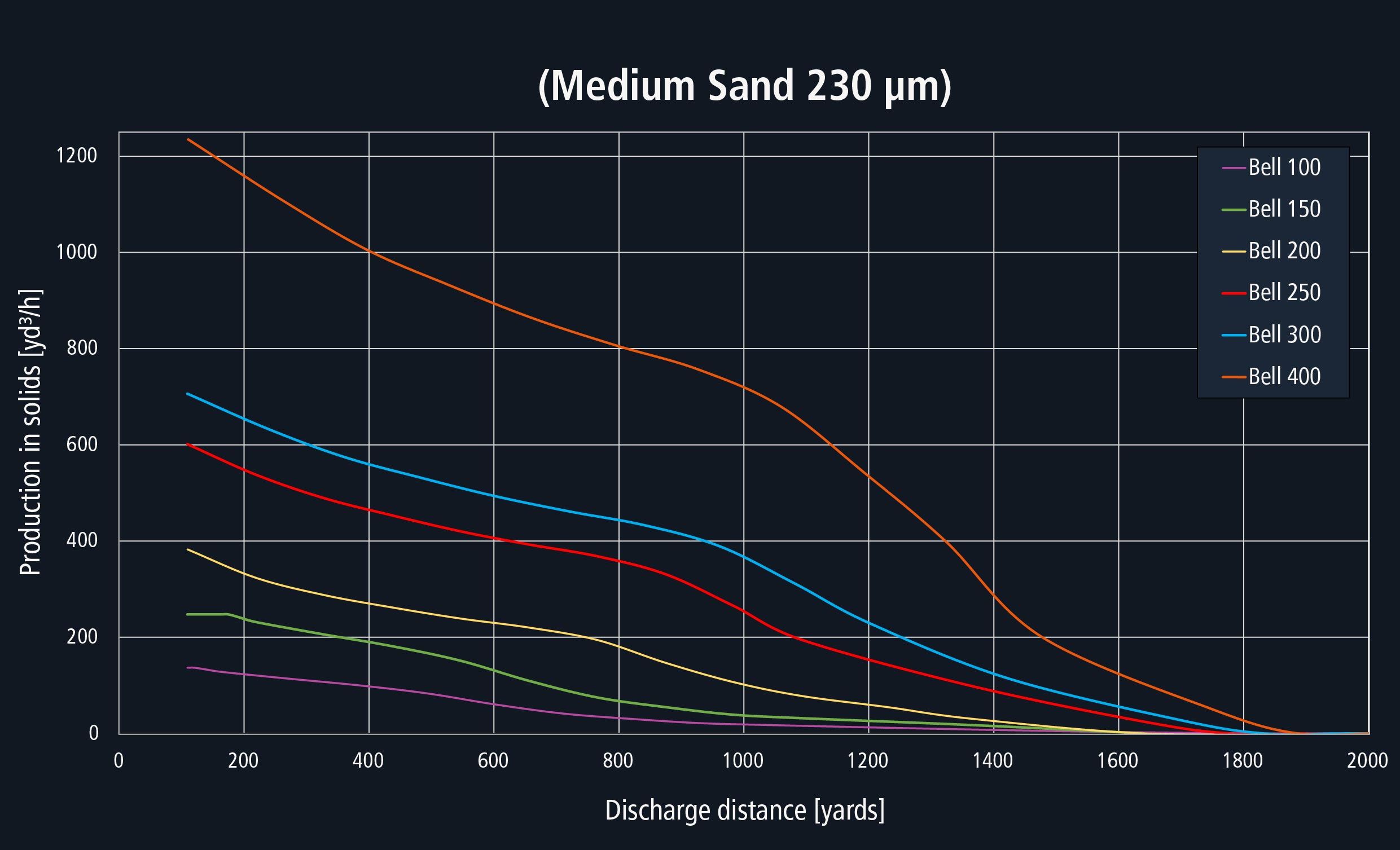
Typical applications
Typical areas of operation
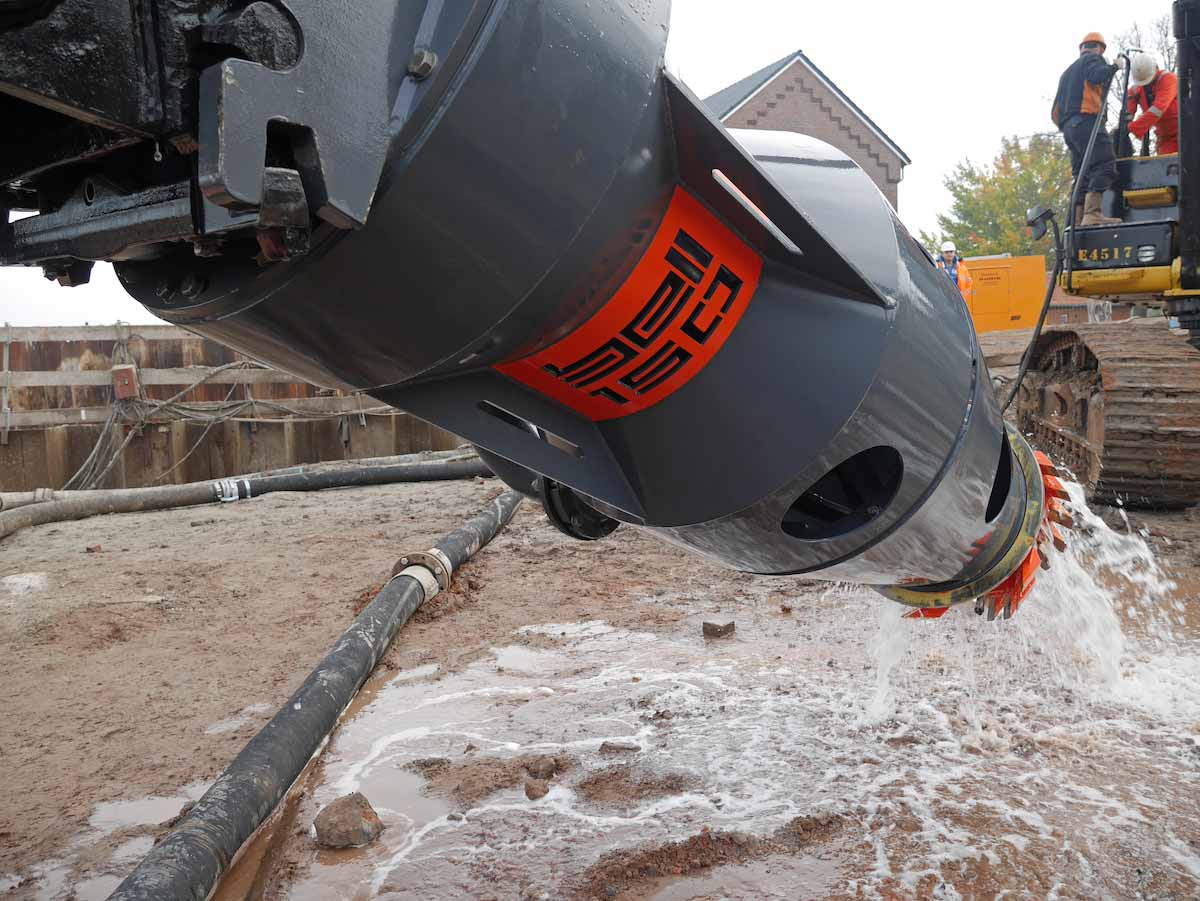
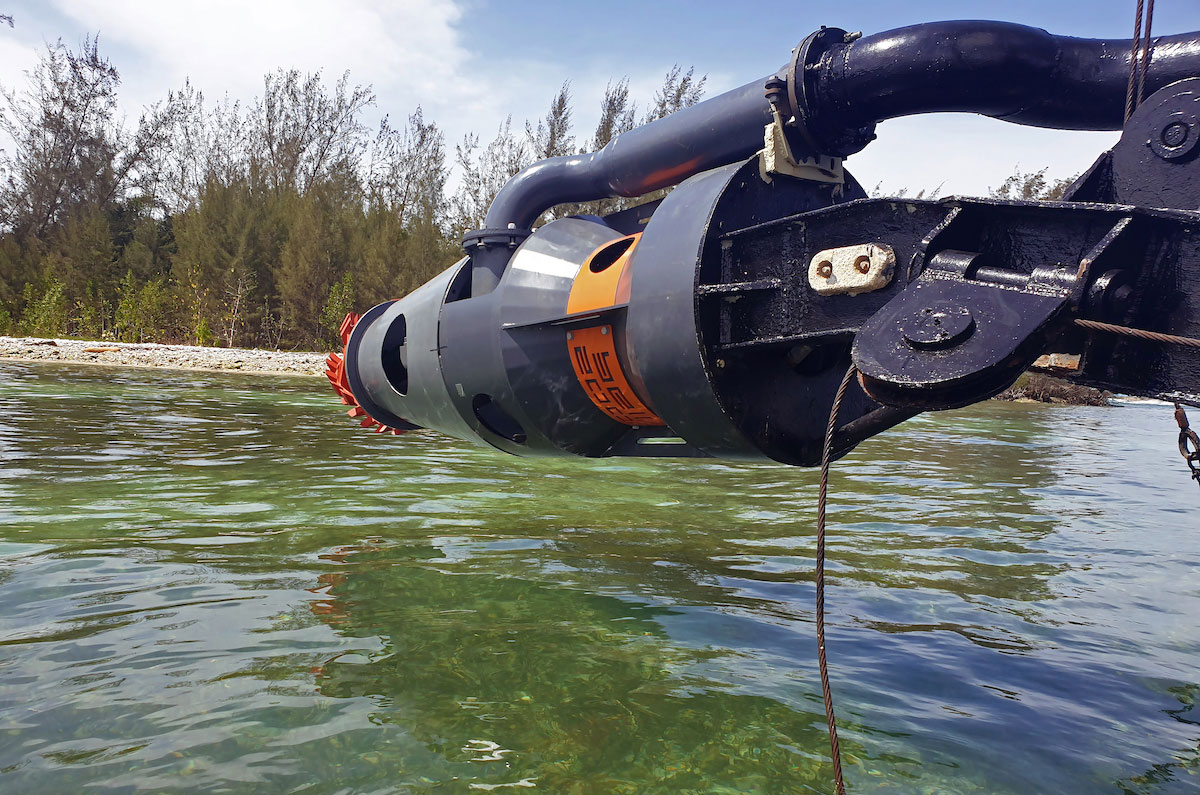
The tables above show the raw specifications, but two figures matter most when matching a pump to a project: mixture capacity and hydraulic pressure/flow.
Mixture capacity is how much water-and-solids mixture the pump can move per hour, from 300 m³/h on the Bell 100 up to 3500 m³/h on the Bell 400. This is the figure that determines how quickly a project gets done, and it scales with pump size.
Hydraulic pressure and pump flow describe the external power source needed to drive the pump, typically a hydraulic power pack, a crawler crane’s hydraulics, or a dedicated power unit. A larger pump needs more flow to reach its rated speed: the Bell 100 runs on 85 L/min at 250 bar, while the Bell 400 needs 1000 L/min at 300 bar. This is worth checking early, since it determines what power source a project needs on site.
Spherical passage is the largest solid particle size the pump can pass without clogging, from 50 mm on the Bell 100 up to 210 mm on the Bell 400. On projects with gravel, debris or larger stones, this figure decides which pump size is actually usable, regardless of the required capacity.
Bell pumps use a Heavy-Duty (HD) mechanical seal, developed together with one of the world’s leading seal manufacturers. Tungsten seal faces and a reinforced construction give the seal a longer service life under abrasive conditions, and its easily replaceable design keeps maintenance downtime to a minimum in the field.
All Bell dredging pumps can be fitted with the Bell Dredge Computer, an industrial PC with RTK GPS/GLONASS positioning and a wide range of sensor inputs, for real-time monitoring of production, position and depth. The Bell Sounder adds hydrographic survey capability, functioning as a single or dual-frequency echo sounder, housed in a rugged, weatherproof case.
When a project needs the mixture pumped further than a single pump can manage, a Bell booster station can be added along the discharge line to maintain pressure and production over the full required distance. Booster stations are available diesel or electrically driven, frame-mounted with the pump positioned for easy access and hose connection.
The head decides what a Bell pump can dig. All heads are interchangeable, so one pump can do different jobs. Bell builds five:
The pump heads page shows all five side by side.
Bell designs and builds its pumps in house and supports them after delivery. The after sales department supplies components with short delivery times, a complete package of spare parts, and advice. Bell Field Service handles warranty and after sales work, technical check-ups, service in remote areas and training courses, both in house and on site. Experienced operators are available too.
Wear parts are made to be replaced. The pump has adjustable NiHard wear plates and an adjustable NiHard impeller, and the mechanical seal can be swapped in the field. Sensors are optional.
Size and output. The Bell 100 moves up to 300 m³/h of mixture with 30 kW at the shaft and passes particles up to 50 mm. The Bell 400 moves up to 3500 m³/h with 500 kW and passes particles up to 210 mm. Without a head, the hydraulic Bell 100 weighs 550 kg and the Bell 400 weighs 7750 kg.
Yes. All Bell heads are interchangeable. Use a sand production head for loose material, a cutter head for consolidated sand and clay, a double cutter head for harder material, an auger head for low turbidity and a flat barge head for emptying barges.
Both versions exist for every size. A hydraulic Bell 250 weighs 2000 kg without head and an electric one 2900 kg. A hydraulic pump needs an external power source, typically a hydraulic power pack or the hydraulics of a crawler crane, so check what you have on site first.
The pump works submerged with its head on the material. It can be mounted on a ladder or crane, suspended from an A-frame, or hang free from a crawler crane.
Add booster stations along the discharge line. Bell builds them diesel driven or electrically driven, from 55 to 560 kW. See the booster stations page for the range.